

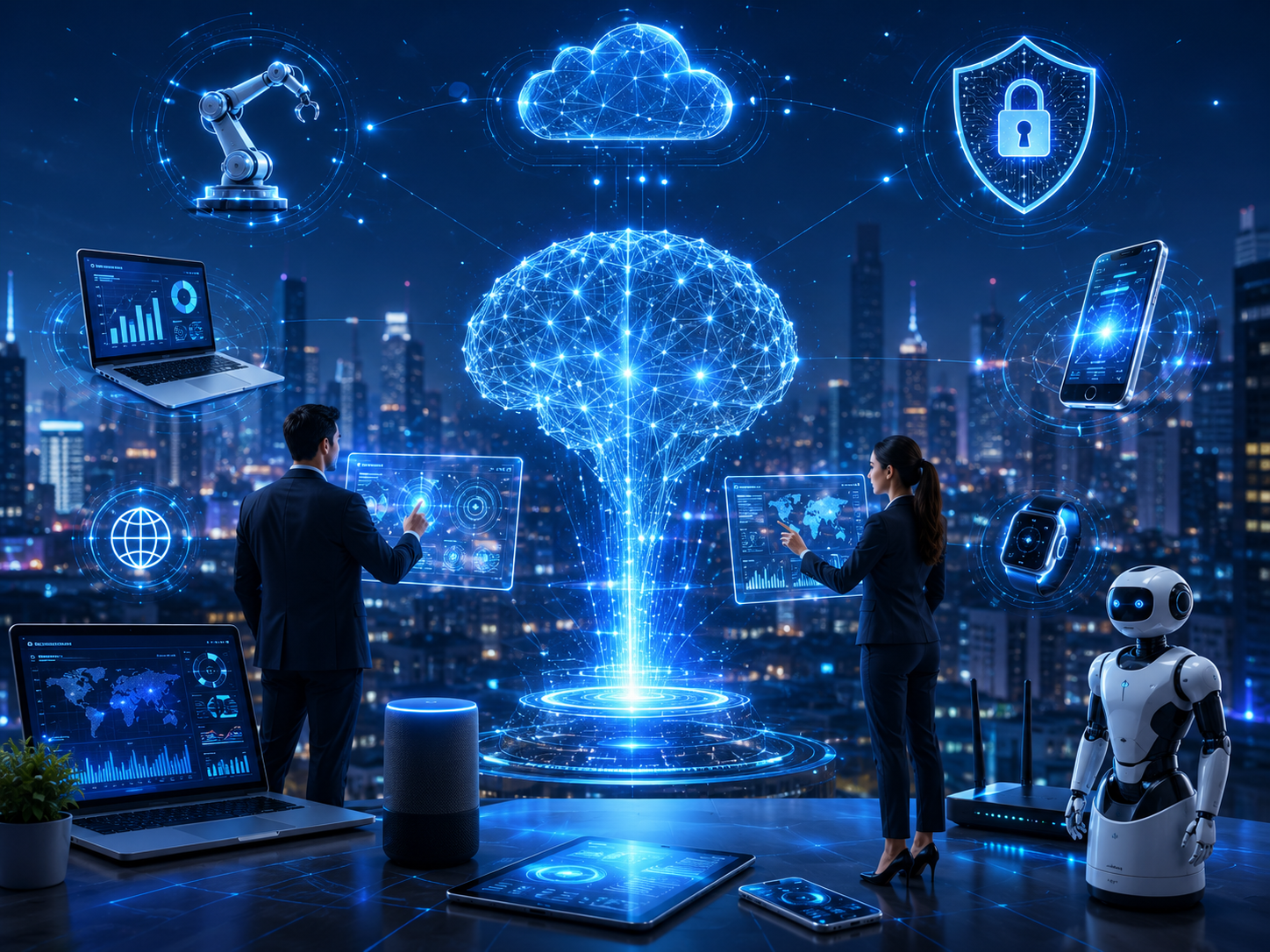
Technology Trends 2026 are defining a new era of innovation where artificial intelligence, cloud computing, cybersecurity, smart devices, and advanced connectivity are becoming central to everyday life. Technology is no longer limited to businesses and technology professionals; it influences how people communicate, learn, shop, work, travel, and manage their health. The pace of digital transformation has accelerated significantly over the last few years, and 2026 is expected to mark another major milestone in technological advancement.
From AI-powered virtual assistants and intelligent automation systems to cloud-based infrastructure and connected smart homes, technology continues to evolve in ways that improve efficiency, convenience, and productivity. Businesses are investing heavily in digital solutions to remain competitive, while consumers are embracing technologies that make life easier and more personalized. Understanding these developments is essential for anyone looking to stay informed about the future of technology.
Artificial Intelligence Continues to Dominate Innovation
Artificial intelligence remains one of the most transformative technology trends of 2026. AI is now embedded into countless digital products and services, helping users perform tasks more efficiently and accurately. Modern AI systems can analyze vast amounts of information, recognize patterns, make predictions, generate content, and even engage in human-like conversations.
The rise of generative AI has significantly expanded the capabilities of artificial intelligence. Unlike traditional software programs that operate according to predefined rules, generative AI can create original text, images, videos, music, and software code. This technology is revolutionizing industries such as marketing, education, healthcare, software development, and customer service.
Businesses are increasingly adopting AI to automate repetitive tasks, improve decision-making, and enhance customer experiences. Meanwhile, individuals are using AI-powered tools to improve productivity, learn new skills, and simplify everyday activities. As AI technology becomes more advanced, its influence on society is expected to continue growing rapidly.
Best AI Tools Right Now
The popularity of AI tools has surged because they provide practical solutions for a wide range of tasks. Content creators use AI writing assistants to generate articles, social media posts, and marketing materials. Designers rely on AI image generators to create professional-quality graphics and visual content. Software developers benefit from AI coding assistants that help write, debug, and optimize code more efficiently.
Students use AI-powered learning tools to understand complex concepts, summarize research materials, and improve academic performance. Businesses leverage AI chatbots, analytics platforms, and automation tools to streamline operations and improve customer engagement. The accessibility of AI technology means that powerful tools once available only to large organizations are now available to individuals and small businesses.
The Future of Artificial Intelligence
The future of artificial intelligence extends far beyond today’s applications. Experts predict that AI systems will become increasingly autonomous, capable of handling more complex tasks with minimal human intervention. Advanced AI assistants may manage schedules, conduct research, automate workflows, and provide highly personalized recommendations.
In healthcare, AI is expected to support disease detection, drug discovery, and personalized treatment plans. In education, adaptive learning systems will create customized educational experiences based on each student’s strengths and weaknesses. In business, AI-driven decision-making tools will help organizations identify opportunities, manage risks, and optimize performance.
While these advancements offer significant benefits, they also raise important questions about ethics, privacy, transparency, and workforce transformation. Balancing innovation with responsible AI development will remain a major priority throughout the coming years.
How Cloud Computing Powers Modern Technology
Cloud computing has become the foundation of modern digital infrastructure. Rather than relying on physical servers and local hardware, organizations can access computing resources through the internet. This approach provides flexibility, scalability, and cost efficiency while reducing the complexity of managing technology systems.
Businesses use cloud computing to store data, host applications, support remote work, and improve collaboration among employees. Cloud services allow organizations to scale resources up or down based on demand, making them particularly valuable for growing businesses.
Consumers also benefit from cloud technology through services such as online storage, video streaming platforms, web-based productivity tools, and cloud gaming. As digital services continue to expand, cloud computing will remain one of the most important technology trends in 2026.
Cybersecurity Becomes More Critical Than Ever
As digital technologies become increasingly integrated into daily life, cybersecurity has become a major concern for individuals, businesses, and governments. Cybercriminals continue to develop sophisticated methods for stealing data, disrupting systems, and exploiting vulnerabilities.
Common cyber threats include phishing attacks, ransomware, malware infections, identity theft, and data breaches. These risks can lead to financial losses, operational disruptions, and reputational damage. As a result, organizations are investing heavily in cybersecurity solutions to protect sensitive information and maintain trust.
For individuals, practicing good digital security habits is essential. Using strong passwords, enabling multi-factor authentication, updating software regularly, and being cautious when sharing personal information online can significantly reduce cybersecurity risks.
Mobile Technology Trends in 2026
Smartphones remain the most widely used technology devices worldwide, and innovation in the mobile sector continues at a rapid pace. Artificial intelligence is increasingly integrated into smartphones, enabling advanced photography features, voice assistants, predictive text, and personalized user experiences.
Foldable devices are becoming more practical and durable, offering larger displays without sacrificing portability. Improvements in battery technology are helping devices last longer between charges, while faster processors provide enhanced performance for demanding applications.
The expansion of high-speed mobile networks is enabling more reliable connectivity, smoother streaming, and improved support for emerging technologies such as augmented reality and cloud gaming. Mobile devices continue to serve as the primary gateway to the digital world for billions of users.
Internet Privacy and Data Protection
As technology companies collect increasing amounts of user data, concerns about privacy continue to grow. Internet privacy refers to an individual’s ability to control how personal information is collected, stored, and shared online.
Many online services track user behavior to personalize experiences, improve services, and deliver targeted advertising. While these practices can provide benefits, they also raise concerns about transparency and data security.
Users are becoming more aware of privacy settings, secure browsing practices, and data protection tools. Privacy-focused browsers, encrypted communication platforms, and secure authentication methods are gaining popularity as individuals seek greater control over their digital information.
AI for Students and Education
Artificial intelligence is transforming education by making learning more accessible, personalized, and efficient. Students can use AI tools to receive instant explanations, generate study materials, practice language skills, and organize research projects.
AI-powered educational platforms analyze learning patterns and adapt content to suit individual needs. This personalized approach can improve engagement and help students overcome learning challenges more effectively.
Teachers are also benefiting from AI technologies that assist with lesson planning, grading, content creation, and administrative tasks. By reducing repetitive work, educators can devote more time to supporting student development and improving learning outcomes.
AI for Businesses and Digital Transformation
Businesses across every industry are integrating AI into their operations to improve efficiency and competitiveness. AI-powered solutions can analyze customer behavior, forecast sales trends, automate routine processes, and provide valuable business insights.
Customer service has been particularly transformed by AI chatbots and virtual assistants that can respond to inquiries around the clock. Marketing teams use AI to personalize campaigns, optimize advertising performance, and better understand consumer preferences.
Organizations that successfully adopt AI technologies often experience improved productivity, reduced costs, faster decision-making, and stronger customer relationships. As AI capabilities continue to advance, business adoption is expected to accelerate further.
Smart Devices and Connected Living
The Internet of Things has created an ecosystem of connected devices that communicate and share information through the internet. Smart devices such as smart speakers, security systems, thermostats, appliances, and wearable technology are becoming increasingly common in homes and workplaces.
These devices offer convenience through automation and remote control capabilities. For example, smart home systems can automatically adjust lighting, temperature, and security settings based on user preferences. Wearable devices can monitor fitness metrics, heart rate, sleep patterns, and other health indicators.
The continued growth of connected technologies is contributing to more intelligent and efficient living environments.
Digital Security Basics for Everyone
Digital security is no longer a concern only for technology professionals. Every internet user faces potential risks when accessing online services, conducting financial transactions, or sharing personal information.
Basic security measures can significantly reduce vulnerability to cyber threats. Using unique passwords for different accounts, enabling two-factor authentication, avoiding suspicious emails, and maintaining updated software are among the most effective protective strategies.
Digital literacy and security awareness will become increasingly important as technology continues to expand into every aspect of daily life.
Future Mobile Innovations
Looking beyond current trends, future mobile innovations promise even greater capabilities. Advances in artificial intelligence, augmented reality, flexible displays, and battery technology are expected to reshape smartphone experiences.
Future devices may feature advanced contextual intelligence capable of anticipating user needs before requests are made. Enhanced biometric security systems, satellite communication capabilities, and immersive mixed-reality experiences may become standard features in next-generation devices.
As technology evolves, mobile devices will continue to serve as powerful personal assistants, communication hubs, productivity tools, and entertainment platforms.
Conclusion
Technology Trends 2026 demonstrate how rapidly innovation is transforming society. Artificial intelligence, cloud computing, cybersecurity, smart devices, mobile technology, and digital privacy are shaping a future that is increasingly connected, intelligent, and automated. These technologies are creating new opportunities for businesses, improving educational experiences, enhancing productivity, and simplifying everyday life.
As technological advancement continues, adaptability and digital literacy will become increasingly valuable. Individuals and organizations that embrace emerging technologies while prioritizing security, privacy, and responsible innovation will be best positioned to succeed in the digital landscape of the future. The technology revolution is far from over, and 2026 represents another important step toward a more connected and intelligent world.
