

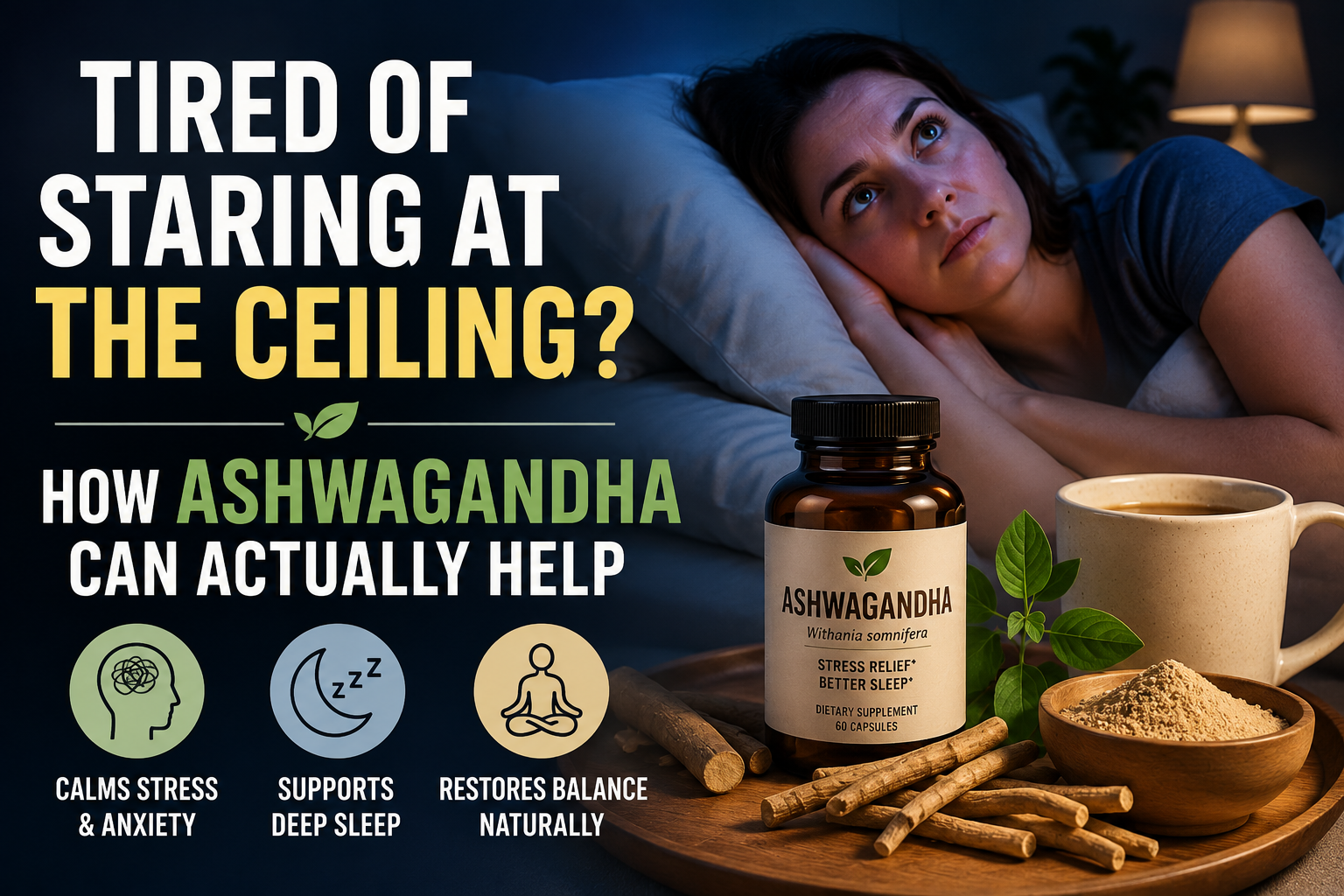
Let’s be real. It’s 2:00 AM, the house is completely quiet, but your brain has decided that right now is the perfect time to review everything you have to do tomorrow. You are exhausted, yet your mind is racing.
If this sounds familiar, you are definitely not alone. In our always-on world, chronic stress and broken sleep have basically become the norm. Most of us just power through with coffee during the day and rely on over-the-counter sleep aids to force our eyes shut at night. But that cycle rarely fixes the actual problem: a completely fried nervous system.
Enter Ashwagandha (Withania somnifera).
Long before we had clinical trials tracking our sleep cycles, Ayurvedic medicine recognized this incredible root as a go-to for bringing the body back into balance. If you are dealing with anxiety, burnout, or restless nights, this natural, science-backed herb might be exactly what you need to finally hit the reset button.
The Frustrating Loop of Stress and Sleeplessness
Stress and sleep are locked in a vicious cycle. When you get stressed, your body pumps out cortisol—the famous “fight or flight” hormone. Cortisol is great when you need to wake up in the morning or dodge a moving car, but modern life keeps our cortisol levels artificially spiked way past dinnertime.
Here is the catch: when cortisol stays high, it bullies melatonin (your sleep hormone) into submission. You can’t fall asleep, and if you do, you can’t stay asleep. You wake up exhausted, which makes you even more sensitive to stress the next day, triggering more cortisol. To break this loop, you don’t need something that just knocks you out; you need something that repairs how your body handles stress in the first place.
What Exactly is Ashwagandha?
Ashwagandha is a small, woody shrub native to India, the Middle East, and parts of Africa. It belongs to a special class of herbs called adaptogens. Just like the name sounds, adaptogens help your body adapt to physical and mental stress without acting like a harsh stimulant or a heavy sedative.
The Ayurvedic Concept of “Rasayana”
In traditional Ayurveda, Ashwagandha is known as a Rasayana, which loosely translates to a rejuvenator. Instead of acting like a typical modern pill that just masks a single symptom, Rasayana herbs are meant to nourish your whole system. The word Ashwagandha actually translates from Sanskrit to “smell of the horse,” nodding to the traditional belief that the herb gives you the strength, stamina, and quiet confidence of a stallion.
The Magic Inside: Withanolides
The real heavy lifting is done by the plant’s active compounds, called withanolides, which are concentrated right in the root. Modern science has confirmed that these natural compounds are the reason the herb is so incredibly good at balancing hormones and supporting brain health.
How a Root Powder Calms a Racing Mind
It is one thing to say it works, but how does it work?
Cooling Down Your Stress Response
Your body manages stress through something called the HPA axis. When you are burnt out, this system is essentially stuck in overdrive. Ashwagandha steps in to cool it down.
In one major clinical study, highly stressed adults who took a high-quality Ashwagandha root extract for 60 days saw their cortisol levels drop by a massive 27.9%. By calming the HPA axis, the herb stops your body from overreacting. You will still face stressful moments—like a nightmare email from your boss—but your internal reaction becomes calm and collected rather than panicked.
Soothing the Nervous System
Ashwagandha also acts like a shield for your brain, helping to clear out the oxidative stress that comes with daily anxiety. Over time, it gently shifts your nervous system out of that high-alert “fight or flight” mode and back into a restorative “rest and digest” state.
Why It Is Gaining Hype as a Sleep Aid
While a lot of people take it to take the edge off daytime anxiety, Ashwagandha has become a massive favorite for sleep. Even its Latin name, somnifera, literally means “sleep-inducing.”
Hitting the Brakes with GABA
Your brain has a neurotransmitter called GABA, and its main job is to slow things down so you can relax and drift off. Many prescription sleep meds work by targeting these exact GABA receptors.
Certain compounds in Ashwagandha mimic this calming GABA activity naturally. It helps quiet the mental noise and preps your brain for deep sleep, all without leaving you feeling groggy and completely wrecked the next morning.
Falling Asleep Faster
If you have been logging your restless nights in a wellness diary, you know that the time it takes to actually fall asleep (called “sleep latency”) is the hardest part. Studies show that taking 300 to 600 mg of standardized Ashwagandha extract daily can shave 10 to 15 minutes off that waiting time, while also seriously improving the overall quality of your rest.
Ashwagandha vs. Other Adaptogens
Not sure which herb to reach for? Here is a quick breakdown to help you navigate the supplement aisle:
| Adaptogen | Primary Benefit | Best For | Best Time to Take |
| Ashwagandha | Stress resilience & sleep | Chronic anxiety, burnout, insomnia | Evening or split dose |
| Rhodiola | Energy & focus | Fatigue, physical exhaustion | Morning |
| Brahmi | Memory & cognitive focus | Studying, complex mental tasks | Morning / Daytime |
The Takeaway: If your biggest hurdles are a racing mind at night and relentless daily stress, Ashwagandha is hands-down your best bet.
How to Actually Get Results
You will only get the benefits if you take it correctly. Here is the game plan.
Dosage and Timing
Clinical studies usually hit the sweet spot between 300 mg and 600 mg of standardized root extract per day.
- For Better Sleep: Take your dose about 30 to 60 minutes before you want to be asleep. Traditionally, mixing it into a warm cup of milk with a dash of nutmeg works wonders for relaxation.
- For All-Day Stress: Split the difference. Take 300 mg in the morning and 300 mg at night to keep your cortisol levels flat and stable all day long.
The Importance of Real-Deal Sourcing
Let’s be honest: the supplement market is flooded with cheap, low-quality powders that barely contain any active withanolides.
If you want real results, you have to look for premium, authentic brands. The best Ayurvedic providers take quality control very seriously. When checking a label, look for markers of true authenticity—like crisp, thermal-printed sequential numbering right on the packaging rather than a generic QR code. This proves you are getting a verified, traceable batch. Always check that the extract guarantees its withanolide percentage (usually between 2.5% and 5%).
A Realistic Timeline: What to Expect
This isn’t a synthetic sleeping pill; it’s a natural botanical that builds up in your system over time.
- Week 1: You might notice a subtle softening of your anxiety and realize you are falling asleep just a little bit faster.
- Weeks 2-4: Your cortisol starts to find its baseline. Nighttime wake-ups become less frequent, and daily annoyances just don’t get under your skin the way they used to.
- Weeks 4-8: This is when the real magic happens. Your deep sleep architecture improves, giving you more daytime energy, a better mood, and sharper focus.
A Quick Word on Safety
Ashwagandha is incredibly safe for most people, but because it is a potent herb, taking too much on an empty stomach can cause mild stomach upset. You should also chat with your doctor first if you are pregnant, nursing, have an autoimmune condition, or take medications for your thyroid or prescription sedatives.
The Bottom Line
You do not have to just accept stress and exhaustion as a permanent way of life. By going straight to the root of the issue—calming that overactive HPA axis—Ashwagandha offers a grounded, scientifically proven way back to feeling like yourself again.
Whether you need to stay sharp during a chaotic workday or just want to finally sleep peacefully through the night, a premium Ashwagandha extract might be the missing piece in your routine.
❓ Frequently Asked Questions (FAQ)
How long does it really take to see a difference in my sleep?
While you might feel a bit more relaxed in the first few days, give it time. The heavy-hitting benefits for your sleep cycle and stress levels really lock in after 4 to 8 weeks of consistent daily use.
Is it okay to take it every single night?
Absolutely. Because it is an adaptogen, it actually needs to be taken consistently to help regulate those cortisol levels and support your brain’s GABA receptors.
Morning or night? When is the best time?
It totally depends on what you want to achieve! If you want to fix your sleep, take it 30-60 minutes before bed. If daily anxiety is your main enemy, splitting your dose between morning and night is incredibly effective.
Will it make me gain weight?
Nope! Actually, by lowering your stress hormones, Ashwagandha can help curb stress-eating and prevent cortisol-related weight gain, keeping your metabolism happy.
Do I need to take it with food?
Ayurveda considers Ashwagandha a slightly “heating” herb, so taking it on a totally empty stomach might make you feel a little uneasy. Tossing it back with a snack or some warm milk is usually the best route.